
Monthly Review – April 2024
OUR PERSPECTIVE
“Capitalism inevitably and by virtue of the very logic of its civilization creates, educates and subsidizes a vested interest in social unrest.” ~ Joseph A. Schumpeter
Let’s start with a few ‘definitions’ to think about:
- Rentier Capitalism, according to ChatGPT:
Rentier capitalism refers to an economic system where a significant portion of wealth and income is derived from owning or controlling access to assets, such as land, property, or financial instruments, rather than from productive economic activities like labour or entrepreneurship. In this system, individuals or entities extract economic rents — excess profits or income obtained beyond what would be necessary to keep an asset in its current use — by exploiting their ownership or control of scarce resources or assets.
- Owner occupiers’ housing costs rental equivalence, according to the Office for National Statistics (ONS):
The owner occupiers’ housing costs rental equivalence approach uses the rent paid for an equivalent house as an estimate of the cost of housing services that are consumed. That is, we value housing services by looking at the cost of the next best alternative to home ownership, namely renting a property.
- Greedflation, according to the Collins Dictionary:
Greedflation is an increase in the price of goods and services caused by businesses increasing their prices by more than their costs have risen.
Inflation has persisted at stubbornly high levels for much longer than many had expected. Whilst demand-side drivers have been robust, it has not been the cause. Rather, its persistence we believe can be attributed to the unintended consequences of higher interest rates and capitalism itself.
We discussed the concept of Rentier Capitalism in our latest quarterly here. In it we discussed how property and company owners exploit their assets, leading to increased rents and profit margins, exacerbating wealth inequality, particularly noticeable amid record-high property prices relative to incomes and record concentrations in equity ownership. We believe Rentier Capitalism is an unintended but inevitable outcome of a capitalist system in its purest form.
Higher interest rates have led to higher rental costs, despite our central bankers hoping for the opposite. The first charts below show housing inflation in the UK and US, hitting levels not seen in decades despite overall CPI data coming down. With housing affordability at extreme levels, it leaves income dependant individuals in society with no alternative but to accept higher rental costs.
The second chart shows the extreme contribution from corporate profits to higher prices immediately following the Covid-pandemic. Significant fiscal stimulus ended up in the wallets of property and equity owners, via higher rents and increased profit margins. Excellent c-suite management…or corporate greedflation? This trend will likely persist until the global economy goes into a recession.
This dynamic is sustainable as long as consumers have excess cash. The era of fiscal dominance is upon us. Our base case is not for inflation to remain sticky forever…but rather, we likely see extreme swings from outright deflation to double-digit inflation and it is this environment that we feel will be worth preparing for.
To see graphs, download the PDF using the button at the top of this page.
EQUITIES
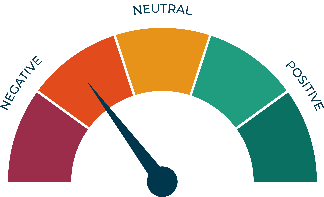
US Equities stumbled through April amid mixed macroeconomic signals, in particular higher inflation, and lower GDP print shaking confidence. Whilst we recognise concerns, we believe China is undervalued and our overweight position paid off as Chinese equities rallied into the end of the month. The other market where we retain conviction and had a strong month was UK equities. Generally unloved, under owned and scarred by Brexit, the FTSE 100 made a new all-time high in April. We remain underweight US equities given valuations, sentiment, and profit expectations. Whilst we maintain conviction in our healthcare and technology related themes, heavily biased to the US equities, the downside risks and absolute size of US equities in global indices, warrants a more cautious allocation.
FIXED INCOME
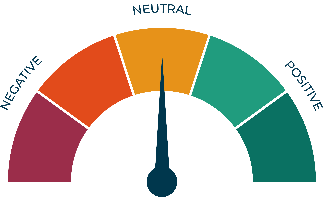
The markets optimism in the soft-landing narrative is very much dependant on rate cuts, which we believe is unlikely in the absence of a significant deterioration in labour data or a credit crisis. This implies rate cuts are more dependent on inflation data and following another higher-than-expected print in April, and risks of accelerating inflation push yields up as bond market generally sold off. We like the absolute yield on offer on shorter-dated Government bonds, including Inflation-linked Government Bonds. Credit spreads remain very tight and given the significant rise in interest rates and material refinancing risks, credit markets are not being priced accordingly and we remain underweight.
REAL ASSETS
Commodities generally had a strong month, driven by expectations of reaccelerating inflation and recovering Chinese demand. Copper posted double digit gains. WTI and Brent continues to trade in the 70’s to 90’s range, a level likely sustainable in the absence of escalations in the middle east or Ukraine. On the other side, Henry Hub Natural Gas prices fell to its lowest level ever seen in April, pointing to a weakening demand outlook. As for Gold, we retain significant exposure. As previously mentioned, we see $2000 as the new floor, with the price in a strong medium-term up trend, the upside could be very significant. Given half the world will vote in national elections this year, we especially like the hedge it provides against monetary devaluation and event risk.
SPECIALIST STRATEGIES
Our specialist strategies continue to play a significant stabilising role within our portfolios. Our managed futures & trend following exposures had another strong month and are up between 10% and 20% in YTD. We retain significant conviction in their role in our portfolios. As mentioned previously, we specifically retain conviction in the sustainability of the competitive advantage of the strategies we own, and the alignment of interest between the managers, and us and our clients. As for private markets exposure, we retain limited exposure to these, both credit and equity, given our concerns regarding debt and the refinancing cycle.
CURRENCIES
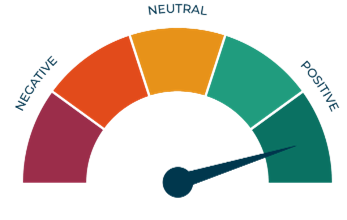
We remain broadly neutral on currencies. On the margin we note that growth and inflation expectations could support a weaker USD, whilst interest rate differentials are pulling it upwards. The US Dollar remains the global reserve currency of choice, and in a severe market dislocation, we expect it to strengthen. We retain our positive view on the Japanese Yen, which we believe is undervalued and offers significant optionality alongside the potential catalysts for a revaluation.
CONTACT US
For further information on any of our services, or if you would like to arrange a meeting with an investment manager to see how we can work with you, please get in touch.
Disclaimer:
We try to ensure that the information provided is correct, but we do not give any express or implied warranty as to its accuracy. We do not accept any liability for errors or omissions. The content of this brochure is for guidance purposes only and does not constitute financial or professional advice.
Important information
Shard Capital Partners LLP is a limited liability partnership, registered in England with registration number OC360394. Shard Capital Partners LLP Registered office: Floor 3, 36-38 Cornhill, London, EC3V 3NG. Shard Capital Partners LLP is authorised and regulated by the Financial Conduct Authority in the United Kingdom, reference number 538762.
This document is provided for information purposes only and is intend for confidential and sole use by the recipient. It is not to be reproduced, copied or made available to others. The information set out in this document does not constitute investment advice or a personal recommendation. The views expressed in this document are not intended as an offer or a solicitation, to purchase or sell any security or other financial instrument, credit or lending product or to engage in any investment activity.
Past performance is not a guide to future performance. It is important that you understand that with investments, your capital is at risk. The value of investments, as well as the income derived from them, can go down as well as up and investors may get back less than the original amount invested. It is your responsibility to ensure that you make an informed decision about whether to invest with us, based on your particular objectives. If you are still unsure if investing is right for you, please seek independent advice.
The information and opinions expressed within this document are the views of (the company) and are based on information we believe to be reliable, but we do not represent that they are accurate or complete, and they should not be relied upon as such. Any information provided is given in good faith but is subject to change without notice.
No liability is accepted whatsoever by (the company) or its employees and associated companies for any direct or consequential loss arising from this document.
Disclaimer:
This document is provided for information purposes only and is intend for confidential and sole use by the recipient. It is not to be reproduced, copied or made available to others. The information set out in this document does not constitute investment advice or a personal recommendation. The views expressed in this document are not intended as an offer or a solicitation, to purchase or sell any security or other financial instrument, credit or lending product or to engage in any investment activity.
Past performance is not a guide to future performance. It is important that you understand that with investments, your capital is at risk. The value of investments, as well as the income derived from them, can go down as well as up and investors may get back less than the original amount invested. It is your responsibility to ensure that you make an informed decision about whether to invest with us, based on your particular objectives. If you are still unsure if investing is right for you, please seek independent advice.
The information and opinions expressed within this document are the views of (the company) and are based on information we believe to be reliable, but we do not represent that they are accurate or complete, and they should not be relied upon as such. Any information provided is given in good faith but is subject to change without notice.
No liability is accepted whatsoever by (the company) or its employees and associated companies for any direct or consequential loss arising from this document.
** Source: Bloomberg Index Services Limited. BLOOMBERG® is a trademark and service mark of Bloomberg Finance L.P. and its affiliates (collectively “Bloomberg”). BARCLAYS® is a trademark and service mark of Barclays Bank Plc (collectively with its affiliates, “Barclays”), used under license. Bloomberg or Bloomberg’s licensors, including Barclays, own all proprietary rights in the Bloomberg Barclays Indices. Neither Bloomberg nor Barclays approves or endorses this material, or guarantees the accuracy or completeness of any information herein, or makes any warranty, express or implied, as to the results to be obtained therefrom and, to the maximum extent allowed by law, neither shall have any liability or responsibility for injury or damages arising in connection therewith.