
Monthly Review – March 2024
OUR PERSPECTIVE
Gold is beautiful. The high metallic luster – meaning it reflects light well – gives it that beautiful shiny appearance. Lesser-known qualities include exceptional malleability and ductility, it has a relatively high melting point, around 1064 degrees Celsius, and is an excellent conductor of electricity and heat. Additionally, gold stands out as one of the densest metals, contributing to its relatively heavy weight. Add to this its corrosion-resistance and scarcity, and you have a highly valuable, uniquely versatile, and rather rare element… one that has been a store of value for centuries.
But gold is expensive. Its value continues to rise whilst it doesn’t provide any yield or income. So, this month we ask ourselves…is it time to sell the shiny stuff?
As shown in Chart1 below, interest in gold from retail investors and ETF allocators in the west continues to decline, with a recent survey from Bank of America finding that 75% of advisors had less than 1% of their portfolios in gold, and less than 10% were considering increasing their exposures. This weakness in demand, however, has been more than offset by central governments and retail investors in Asian markets such as China. Despite interest rates at levels not seen in well over a decade, we believe there are several reasons why the price of gold is likely to continue to rise.
Government liabilities continue to rise as demographic tailwinds of the last four decades become headwinds. At the same time, fiscal spending and government deficits are increasingly likely to be funded by money that doesn’t exist. That is, governments will most likely fund their liabilities by printing money. This debt monetization devalues the value of fiat currencies, the direct consequence being asset price inflation. Chart 2 shows how the increase in the price of gold has not held up with the enormous amount of money printed by central banks. Considering more government debt is likely to end up on the balance sheets of central banks, the upper bound for gold is still a long way off!
Gold also offers protection against unpredictable and potentially significant events that can have a sudden and adverse impact on financial markets, economies, or geopolitical stability. These events may include political turmoil, wars, terrorist attacks, natural disasters, pandemics, economic crises, or unexpected shifts in monetary policy.
Finally, given the arbitrary nature of the fair value of gold, we believe a technical approach is the most practical and useful valuation methodology to price gold. Specifically, we employ a trend following strategy to determine exposure to the commodity based on the strength and significance of the underlying price signals. The trend remains very strong and would suggest investors increase exposure.
In conclusion, we believe the inevitability of financial repression is misunderstood, macroeconomic and geopolitical event risks are under-appreciated, gold is generally under-owned by institutional and retail investors in the west, whilst the underlying trend remains very strong and robust. All in all, the outlook for gold is as shiny as the metal itself, and we retain significant conviction and exposure.
“Gold is the money of kings, silver is the money of gentlemen, and barter is the money of peasants. But debt, is the money of slaves.”
~Franz Norm
To see graphs, download the PDF using the button at the top of this page.
EQUITIES
A strong March ensured equity markets finished Q1 well into the green, with China being the only major economy where concerns remain high and sentiment weak. Whilst we recognise concerns, we believe China is undervalued and opportunities for active managers should be significant over the next 3 to 5 years. On the topic of value, we recently moved to an overweight in UK equities, and remain significantly overweight Japan, both markets had a very strong March. Further west, and the soft-landing narrative is now well and truly baked into US equity markets. Given valuations, sentiment and profit expectations, we remain underweight US equities. Whilst we maintain conviction in our healthcare and technology related themes, heavily biased to the US equities, the downside risks and absolute size of US equities in global indices, warrants a more cautious allocation.
FIXED INCOME
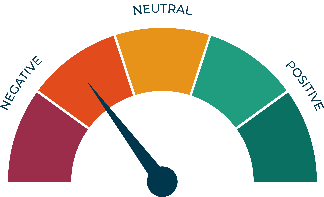
The markets optimism in the soft-landing narrative is very much dependant on rate cuts, which we believe is unlikely in the absence of a significant deterioration in labour data or a credit crisis. This implies rate cuts is more dependent on inflation data, which has proven much stickier than markets expected 6 months ago. Inflation breakeven data have also been rising, which supported our inflation-linked bond exposure. We like the absolute yield on offer on shorter-dated Government bonds, retain healthy exposure to longer dated Gilts and Inflation-linked / TIPS exposure in the US. Credit spreads remain very tight and given the significant rise in interest rates and material refinancing risks, credit markets are not being priced accordingly and we remain underweight.
REAL ASSETS
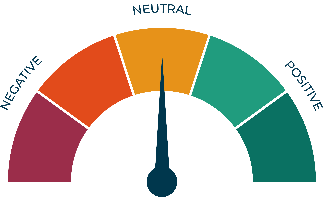
WTI and Brent continues to trade in the 70’s to 90’s range, a level likely sustainable in the absence of escalations in the middle east or Ukraine. Natural Gas and copper remain weak, we believe an indication of slacking demand. Gold was the standout performer in March, the biggest contributor in portfolios and the only commodity we are overweight. We see $2000 as the new floor, with the price in a strong medium-term upward trend, the upside could be very significant. Given half the world will vote in national elections this year, we especially like the hedge it provides against monetary devaluation and event risk.
SPECIALIST STRATEGIES
Our specialist strategies continue to play a significant stabilising role within our portfolios. Our managed futures & trend following exposures had another very strong month and are up between 5% and 15% in Q1. We retain significant conviction in their role in our portfolios. As mentioned previously, we specifically retain conviction in the sustainability of the competitive advantage of the strategies we own, and the alignment of interest between the managers, and us and our clients. As for private markets exposure, we retain limited exposure to these, both credit and equity, given our concerns regarding debt and the refinancing cycle.
CURRENCIES
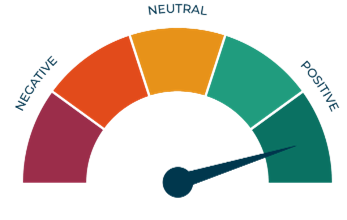
We remain broadly neutral on currencies. On the margin we note that growth and inflation expectations could support a weaker USD. However, the US Dollar remains the global reserve currency of choice, and in a severe market dislocation, we expect it to strengthen. We retain our positive view on the Japanese Yen, which we believe is undervalued and offers significant optionality alongside the potential catalysts for a revaluation.
CONTACT US
For further information on any of our services, or if you would like to arrange a meeting with an investment manager to see how we can work with you, please get in touch.
Disclaimer:
We try to ensure that the information provided is correct, but we do not give any express or implied warranty as to its accuracy. We do not accept any liability for errors or omissions. The content of this brochure is for guidance purposes only and does not constitute financial or professional advice.
Important information
Shard Capital Partners LLP is a limited liability partnership, registered in England with registration number OC360394. Shard Capital Partners LLP Registered office: Floor 3, 36-38 Cornhill, London, EC3V 3NG. Shard Capital Partners LLP is authorised and regulated by the Financial Conduct Authority in the United Kingdom, reference number 538762.
This document is provided for information purposes only and is intend for confidential and sole use by the recipient. It is not to be reproduced, copied or made available to others. The information set out in this document does not constitute investment advice or a personal recommendation. The views expressed in this document are not intended as an offer or a solicitation, to purchase or sell any security or other financial instrument, credit or lending product or to engage in any investment activity.
Past performance is not a guide to future performance. It is important that you understand that with investments, your capital is at risk. The value of investments, as well as the income derived from them, can go down as well as up and investors may get back less than the original amount invested. It is your responsibility to ensure that you make an informed decision about whether to invest with us, based on your particular objectives. If you are still unsure if investing is right for you, please seek independent advice.
The information and opinions expressed within this document are the views of (the company) and are based on information we believe to be reliable, but we do not represent that they are accurate or complete, and they should not be relied upon as such. Any information provided is given in good faith but is subject to change without notice.
No liability is accepted whatsoever by (the company) or its employees and associated companies for any direct or consequential loss arising from this document.
Disclaimer:
This document is provided for information purposes only and is intend for confidential and sole use by the recipient. It is not to be reproduced, copied or made available to others. The information set out in this document does not constitute investment advice or a personal recommendation. The views expressed in this document are not intended as an offer or a solicitation, to purchase or sell any security or other financial instrument, credit or lending product or to engage in any investment activity.
Past performance is not a guide to future performance. It is important that you understand that with investments, your capital is at risk. The value of investments, as well as the income derived from them, can go down as well as up and investors may get back less than the original amount invested. It is your responsibility to ensure that you make an informed decision about whether to invest with us, based on your particular objectives. If you are still unsure if investing is right for you, please seek independent advice.
The information and opinions expressed within this document are the views of (the company) and are based on information we believe to be reliable, but we do not represent that they are accurate or complete, and they should not be relied upon as such. Any information provided is given in good faith but is subject to change without notice.
No liability is accepted whatsoever by (the company) or its employees and associated companies for any direct or consequential loss arising from this document.
** Source: Bloomberg Index Services Limited. BLOOMBERG® is a trademark and service mark of Bloomberg Finance L.P. and its affiliates (collectively “Bloomberg”). BARCLAYS® is a trademark and service mark of Barclays Bank Plc (collectively with its affiliates, “Barclays”), used under license. Bloomberg or Bloomberg’s licensors, including Barclays, own all proprietary rights in the Bloomberg Barclays Indices. Neither Bloomberg nor Barclays approves or endorses this material, or guarantees the accuracy or completeness of any information herein, or makes any warranty, express or implied, as to the results to be obtained therefrom and, to the maximum extent allowed by law, neither shall have any liability or responsibility for injury or damages arising in connection therewith.