
Quarterly Insights – Q4 2021
If anything, 2021 proved that forecasting is futile.
If we thought that 2020 would set the benchmark for volatile and unpredictable years, then 2021 has run it a very close second. Whilst 2021 marked an improvement for many over their experiences in 2020, we’ve seen several false dawns over the last 12 months as well. Whilst shoppers were able to return to the high streets – and to the coffee shops – and as employment rates began to also pick up again so many, quite reasonably, began to feel that a post Covid “normality” might re-establish itself and allow our lives to gradually return to “normal”. Initially this prognosis appeared well founded as equity markets, who tend to look through short-term problems, did indeed rally consistently for most of the year. However, stubbornly high inflationary pressures together with an increasingly more hawkish outlook from the Fed had already begun to take the steam out of the market rally, even before reports out of South Africa concerning the new Omicron variant arrived. This last bit of news provided the excuse for a (probably much needed) market sell-off during the month. That said markets recovered their poise late in December and recouping most of the November losses meaning that, led by the US yet again, many equity indices finished the year at or close to all-time highs. In USD terms the MSCI US Index posted a 26% return over the year with the MSCI AC World Index not far behind with a return of 19% in 2021.
As for our outlook for 2022, whilst trying to remain optimistic we see some dark clouds gathering, which could turn out to be very disruptive if monetary and fiscal policies are not handled very carefully over the next 12 months. Financial asset valuations remain elevated and the outlook for growth and economic activity, whilst positive, are unlikely to surprise to the upside.
Before we jump into the outlook for the year ahead and asses both the opportunities, and risks, on the horizon let us briefly review the events of 2021.
The Bloomberg US Aggregate Bond Index is set to deliver its worst return since 2013. In USD terms, the Index is down -1.5% up until Christmas day. The Index has only registered 3 negative years over the last 40 years, 1994, 1999 and 2013, when it fell -2.9%, -0.8% and -2% respectively. Whilst minor drawdowns in the global bond indices are not uncommon, they typically occur mid to late cycle after the Fed has started its hiking cycle. Historically investors were able to adopt a fairly mechanistic approach to rebalancing, following any sell-off, given relative yields available and the de-correlation benefits of the asset class. However, this year, with yields still close to all-time lows in nominal terms (and negative in real terms) a mechanistic approach is certainly not advisable!
Chart 1: The last 40 years for the Bloomberg US Aggregate is unlikely to be repeated in the next 40:

Notes: Bloomberg US aggregate index to 100 on 31/12/1981
In quite stunning contrast however, equities had another bumper year! The ‘vaccine-rally’ lasted well into the first half of 2021 and by mid-May “value” stocks, led by commodity producers and banks, had outperformed “growth” stocks by as much as 35%. At this point the market seemingly started to question the sustainability of the recovery and so a rotation back into so-called ‘pandemic-stocks’, led by technology, became the dominant theme. The net result of all this was that US equity markets are now trading close to all-time highs. With policy rates close to historic lows, one could justifiably argue that higher net present values for most assets are warranted, but the question now vexing most investors is what the prospect of higher inflation, and therefore higher rates, will do to valuations of all long duration assets.
Chart 2: U.S. CAPE ratio against long term interest rates:

The acronym TINA – referring to the belief that given historically low interest rates (and therefore historically high bond prices) ‘There-Is-No-Alternative’ to equities, has been thrown around in financial media for some time now. But is this in fact still the case? We therefore turn this acronym into a question, and ask ourselves: Is-There-Really-No-Alternative? In short, we believe there is! In our view the biggest risk investors face today is a passive allocation to a traditional 60-40 model. Whilst correlations between bonds and equities have been low to negative since the dotcom bubble burst, this dynamic is different when inflation is high. In real terms, the outlook for a 60-40 portfolio is arguably less attractive than at any point in history. Should correlations increase, the outcomes could be disastrous, especially given the size of flows into this allocation-strategy and the increasing number of investors accessing it through passive vehicles.
Chart 3: Where does the equity-bond correlation go from here?

Notes: Rolling 2-year correlation based on monthly frequency
It must be admitted that, to date, our allocation to Gold has not worked as well as expected. However, this position is included with the intention of preserving capital in real terms over time, so making a judgement after only one year would be inappropriate in this context. We still believe that the bloated state of public debt, the equally bloated size of central bank balance sheets and the increasing risk of policy errors, makes gold an attractive asset given its capital preservation characteristics. The precious metals complex generally, which includes Platinum, Palladium and Silver, have lagged industrial commodities like oil and copper, by a considerable margin given rising demand generated by the “reflation” trade.
Chart 4: Commodity performance in 2021:

Notes: Indexed to 100 on 31/12/2020
However, as and when overall demand slows, or indeed when capital markets begin to price in the higher probability of policy errors, or maybe when bond-equity correlations rise, we expect gold to prevail. Indeed, we believe one of the biggest risks is that capital markets eventually lose confidence in the credibility of the US government and therefore lose confidence in the Greenback. Whilst not likely in the immediate future neither is it a zero-probability risk. Such an event would likely drive gold significantly higher.
Chart 5: Gold exposure justified by the amount of money printed over the last decade and the risk of policy errors:

China’s “Common Prosperity” brings with it significant uncertainty, but undoubtedly also opportunity!
One of our better investments in 2021, and since inception, has been carbon credits. Whilst most people accept and recognise that global warming is a clear and present danger to our collective future, the long-term solution is far harder to determine. However, in our view Carbon credits have a key role to play in helping to reduce long term use of fossil fuels. Alongside other solutions, like solar and wind power, nuclear energy, and new technologies, like battery storage or more efficient use of energy, carbon credits can help redress the balance over time. We recognise, that for a workable solution to emerge traditional fossil fuel producers will have to work closely with clean energy producers to shift the supply structure sustainably from one source to the other over time in order to meet our transition to net zero.
As for carbon credits the supply-demand imbalance will continue. Supply will continue to decline as the regulatory issuing bodies release fewer carbon credits at auctions. At the same time, demand will continue to rise as coverage expands and more speculators join the market. The beauty of carbon credits is the broadly uncorrelated nature of the asset class. Economists, the scientific community and industry specialists agree there is an appropriate price for carbon emissions, which the free market could optimally adjust to provide the best mix of goods and services, while accounting for environmental damage caused by pollution from carbon emissions. This price is generally accepted to be north of $100/ton of CO2 in order to achieve our ambitious net-zero targets. Whilst we believe carbon credits are still under-owned by the majority of market participants, the upside for 2022 is not another 150%!
Chart 6: EU Carbon Futures:

Finally, an area that had mixed outcomes, lies further east…. The Middle Kingdom!
The Chinese leadership has stated that “Common Prosperity” is a key policy objective of the ruling party. What market participants need to assess is exactly what that means in practical terms as far as investments into China’s capital markets are concerned. Specific government “interventions” allied to overall uncertainty has led to a significant sell-off in Chinese equities this year. Add to these further disputes around financial reporting, listing requirements, and a newfound discussion around VIE-structures, it is little surprise that many previously loved Chinese-internet behemoths have been substantially de-rated by the markets.
Chart 7: Despite consistently higher levels of revenue growth, Chinese Internet related companies have significantly underperformed their US equivalents over the last 10 months:

Notes: Indexed to 100 on 31/12/2018
On the other hand, Chinese Government Bonds turned out to be the safe haven we expected they would be, if and when equity markets corrected. We let our exposure to Chinese Government Bonds (CGB) run as market uncertainty played out, and alongside a strengthening Renminbi, overall return in USD terms has been +8% YTD.
Chart 8: Whilst Chinese Tech stocks struggled, Chinese treasuries proved its safe-haven characteristics:

Chart 9: with a FCF yield of over 8% based on the last twelve months, and trading on an EV/Sales multiple of under 2x based on revenues over the next 12, Alibaba shares are significantly cheaper than at any point since its IPO in 2013.

Our asset allocation approach starts by going very high in order to see the wood for the trees! Below we highlight six ‘Foundational Blocks’ we believe are crucial to get a global macro-economic and geopolitical view of the world as we enter 2022.
Inflation
For inflation to be sustained, one of two factors, if not both, need to be true. One need to see sustained consumer demand, driven by both demographic and credit growth, or a collective and sustained, long term fiscal and monetary policy measures, supporting both investment and income growth – aka. Financial Repression. However, in the Unites States 10,000 Americans turn 65…every day! In Europe demographics are even worse, with population growth virtually 0 with younger people studying longer or entering labour markets later. In short, the working age population in the rich world are in decline. At the same time, technological advance – automation of supply chains and the internet – will continue to place significant downward pressure on these already negative demographics. Finally, in the welfare state – the system we live in today where the state undertakes to protect the health and well-being of all its citizens – requires governments to direct capital to support negative demographics, not to mention the enormous amounts of debts they need to repay! President Biden’s Green New Deal is in many ways the type of fiscal policy required to achieve the required investment and income growth. But as we’ve seen, paying for such fiscal measures is near impossible. For these reasons, we struggle to see a sustained period of higher inflation and believe it more likely that the rich world will fall back into low-inflation, low-growth environment we were stuck in pre-pandemic. In the near term however, year-on-year price rises will remain high as a consequence of supply-demand mismatches coming out of economic lockdowns, which will put further pressure on central banks to pursue tighter monetary policies. But this is a short-term outcome to pandemic-related measures and base effects, which will neither sufficiently support investment, nor boost demographics. The prospect, if not the reality, of higher rates and tighter policies from many of the major global central banks will act as a psychological “dampener” on risk appetites until such time as it becomes clearer that inflationary pressures are abating once base effects wear off and as a result, rate rises will be more muted than generally expected. For this reason, we retain our view that inflation is transitory. That said, we remain underweight DM fixed income and prefer fixed income “proxies” like property and infrastructure benefitting from longer term structural trends and interest remaining lower for longer.
Interest Rates
The Federal Reserve, the “primus inter pares” of global central banks, like most of their major peers, are trapped in a monetary straitjacket of their own making. The simple reason for this is that so much monetary stimulus has been extended across the world, for so long, that all sectors of society, from the public to governments to corporations are all now so hooked on “monetary drugs”, that trying to wean them all off these “monetary stimulants”, after over a decade of effectively saying “have as much money as you want at negative real rates of interest”, is going to be no easy task. This is particularly so as low rates are effectively propping up house prices, corporate bonds, equity markets, in fact just about all prices, most of which are hovering near record highs. Raise rates by too much or too quickly and the asset bubble could (most likely will) implode. Don’t raise them and inflation may take hold and put pressure on real incomes thereby exacerbating further global wealth inequality. To show how finely balanced the situation is let us examine the (theoretical) sensitivity to a rise in interest for bond prices. According to the St Louis Fed the outstanding stock of US Treasuries stands at $23.3 trillion. On that basis and assuming average duration on all those bonds of 6.2 years, the DV01 – the sensitivity to a move of 1 basis point – in rates is a mind blowing $14.4 billion. On that basis, the capital loss across the outstanding stock of US Treasuries due to a 1% rise in interest rates would, theoretically, amount to $1.4 trillion. The BofA US Corporate Bond Index stands at roughly $8.9 trillion of outstanding bonds, with a duration of 8.6 years. The DV01 on that index alone stands at £7.9 billion. So again a 1% rise in rates would, theoretically, lead to capital losses of $790 billion! So anyone blithely saying; “Oh yes, the FED will raise by 100 bps over the next X months” might like to pause and take into account the consequences on bond markets, and by extension therefore, all other asset markets. For this reason, we remain less convinced than most that Fed Funds will be at 1.25% anytime soon, or at least not without causing serious problems for global asset markets.
COVID-19
Covid-19 has been afflicting society and global market economies for almost 2 years now. In that (relatively short) time the medical advances as regards understanding the virus and creating vaccines which (in most cases) act very effectively to immunise and prevent the spread of Covid-19 has been nothing short of stupendous. Government handling of the pandemic (pretty much everywhere) rather less stupendous. The upshot of that, in our view, is that:
- vaccines/treatments/immunities are now sufficient in scale and effectiveness to contain the worst side effects of the virus……this is never going away, we are just going to have to learn to live with it, and
- as a direct result of i) people in most countries have had enough of the personal restrictions imposed, the cost to business, the mental health legacy and perhaps most important of all, the huge delay now affecting people suffering from very serious (non-covid) illnesses, like cancer, strokes, heart attacks etc.
Most people now think that with the majority being vaccinated, we have done enough to justify a return to normality. We believe the lockdowns and travel restrictions now being imposed in Europe and elsewhere will prove to be the last time this is tolerated by civil society. Once the northern hemisphere is through this winter shutdown the pent-up demand and economic recovery will get its second breath and equity markets should get a “feelgood” boost during the first two quarters of 2022.
Emerging Markets
Emerging markets had a bad year in 2021. Relative valuations with Developed Markets are even more compelling now. Much of the underperformance of the EM Index was due to China’s heavy weighting therein. However, valuations in China, and indeed much of Asia, now reflect known risks. The Zero-Covid policy adopted by many countries in the region, especially China, placed greater pressure on these regional economies. But with many abandoning this policy and the west now looking like re-opening will gather pace through 2022, much of the pent-up demand for Asian goods and services should reappear. With most fund managers underweight the region it won’t take a lot of money to get Asian stocks moving higher again.
Chart 10: The discount of Emerging Markets relative to Developed Markets are back to historically extreme levels.

Notes: Valuation discount determined using average between the Price to Book ratio of the last 12 months, and the Price to Earnings Ratio of the next 12 months.
Energy
It may appear counterintuitive to invest in oil, gas and mining companies these days given the short-sighted aversion towards them by many investors, but the simple truth is that:
- like it or not the world will need carbon fuels for quite some time, if for nothing else but to ensure a viable transition to net-zero,
- to the first point, all the metals required in the green energy sector that need to (by definition) be mined,
- both carbon fuel and mining companies are urgently “re-inventing” themselves and using free cashflows to clean up their act and/or invest in clean energy sectors,
- lack of investment leads to reduced production, which leads to lower supply which leads to higher prices which is plays into the hands of “less savoury” jurisdictions who can then increasingly hold the west to ransom
….is this what we want? In addition, as an investor you are rewarded for the risk at current valuations, whilst exposure acts as a hedge against near-term reflationary pressures.
These “foundational blocks” we believe are crucial in order to manage risks capital markets pose given where we are in both the economic, but also the longer-term debt cycle.
Whilst managing risk is crucial, and central to our investment philosophy, we also note the era we live in is unparalleled in history when it comes to innovation, technological change and opportunity.
Below we discuss some of the themes we have identified and play central role in all of our portfolios.
Digitalisation
The internet has revolutionised the world. The era we live in has been, and will continue to be, dominated by e-commerce, social media, Web 3, the automation of supply chains, and a world where devices increasingly interact with each other rather than humans. The Covid-19 pandemic has only accelerated these trends, and we retain conviction in many of the underlying beneficiaries, including software, cloud-infrastructure, and semiconductors. It is now over a decade since Marc Andreessen, co-founder and general partner at Venture Capital firm Andreessen Horowitz, wrote his essay on “Software is eating the world”, and this holistic trend is far from reaching maturity. Indeed, the Digitalisation theme is such a big opportunity, we have broken it into 4 sections, including:
- Semiconductors
- Robotics & Automation
- Software & Cloud Infrastructure
- Digital Entertainment
Each of these sub-industries will experience rapid and significant growth in the years ahead as the ongoing need for increasing and faster data-management accelerates.
Semiconductors has been a fantastic investment for us, and whilst we see continued growth in the industry, valuations are more challenging today and upside are no doubt less than it was a year ago. Similarly, Software and Cloud Infrastructure has been a fantastic investment, but whilst we retain some exposure, the longer-term asymmetry is perhaps less attractive. One area we are hugely excited about is Digital Entertainment, which includes Online Gaming and Web 3.0. Another area we are doing a lot of work on is Digital Payments and FinTech – a direct fallout of digitalisation trends, we also see Fintech as a significant beneficiary of Web 3.0.
The way the world is banking is rapidly changing. Whilst banks generally have little environmental impact, their social impact is significant, and we believe still underappreciated. Banks will most likely need to redirect their focus from financial services to financial betterment. With higher integration of predictive insights through the use of AI and higher degrees of data analysis, this will assist banks to anticipate their customers’ needs even before they do. Even pre-pandemic businesses and individuals faced numerous challenges in their day-to-day banking activities, and with the pandemic new challenges emerged and have put even further pressures on traditional banks. Clients are now looking for innovative solutions to tackle these issues, so client expectations are at their highest. In response to this over the last couple of years we have seen more and more businesses of all sizes shift from offline to online and creating a major acceleration in digital infrastructure to gain scale, security and broaden their target market. We can witness this even in many of the strategic partnerships taking place. Many traditional banks have formed JV’s and alliances with a number of different fintech companies. Nowadays traditional banks do not see each other as the biggest threat but are all focused to protect their market position from incumbent Silicon Valley – jeans and T-shirt wearing – FinTech companies. Jamie Dimon and Brian Moynihan should be worried…especially now that large tech giants such as Google and Alibaba are making serious moves into the loans business and are doing it in a way that allows for them to own superior insight as most of these transactions are taking place on their own platforms. Not to mention challenger banks such as Revolut, Point-of-Sale-Financing – aka Buy-now-Pay-later – businesses such as Affirm and Klarna, or the rise of new payment protocols within Cryptocurrencies. Coinbase and PayPal provides both consumers and merchants with the ability to pay and / or accept crypto payments. The network effect large platform companies benefit from, and the opportunity similar new platforms come with, is a very significant opportunity we see…not too far on the horizon.
Innovation in Healthcare
Global Healthcare systems are expensive, and costs are rising fast. Covid-19 aside, the reality is that fewer and fewer patients receive the healthcare service they require. At the same time, innovation in life sciences and healthcare technology has been rising faster than at any point in history, and we are now on the cusp of entering the age of personalised medicine, enabled by genomics and new therapies, like Immunotherapy or CRISPR technology. Indeed, the speed and science behind the development of the m-RNA Covid-19 vaccines are proof that have entered a new era in healthcare. New technologies are driving significant innovation and in areas such as Tele-Medicine, Diagnostics and Robotic Surgery. These new and emerging trends within Healthcare, we believe, will have very significant consequences on Healthcare systems globally, including cost savings with the associated deflationary benefits and an increasing focus on prevention, rather than treatment. The benefits to investors will be very significant and we believe this to be a trend which is still in its relative infancy.
Smart Infrastructure
ESG, E-commerce and Big Data have rendered much of our current infrastructure outdated. Whilst not new to us, the world has finally come to a consensus that we need to look after our planet and the well-being of the societies we operate in. History has perhaps proven that capitalism is as good, if not better, an economic blueprint to operate in than any other – but not at any cost! We are big supporters of the transition to a Carbon Neutral world and believe this is a theme that will offer attractive and stable investment opportunities to investors, including sub-themes such as decarbonising the grid. Furthermore, Digitalisation has resulted in the need for infrastructure to either adapt or die, and like software, the Covid-19 pandemic has accelerated many of the existing trends: more warehouses, more data centres, more Telecoms towers, and less high street shopping and bank branches. Similarly, we believe increasing investment in data centres will continue to facilitate the expansion of E-Commerce, the Internet-of-Things and 5G.
Asian Consumer
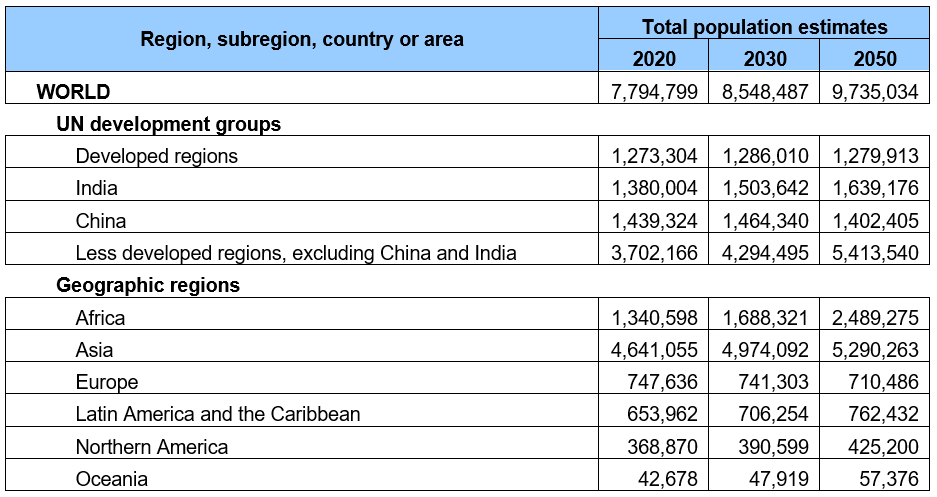
More than a third of the world’s population lives in India and China alone. When you add the populations of Pakistan, Bangladesh and the ASEAN economies, that number accounts for over half the world’s population. In contrast with the West, demographic trends in the region remains attractive – Asian consumers are growing in number and in wealth and crucially, credit penetration is still low. They are also moving up the value chain as regards what they are buying, where they are buying and how they are buying. China and South Korea have the highest e-commerce and internet penetration rates in the world. The majority of the populations in the Indian sub-continent and ASEAN still live in areas classified as rural, but urbanisation rates are rising and remains a significant factor underpinning this long-term trend and opportunity. Whilst these trends have benefitted many international brands, from Colgate to Apple, the bigger beneficiaries are increasingly local brands and services, including companies like, Flipkart and Marico in India, Li Ning and Meituan in China or SEA Ltd in Singapore.
Table 1: World Population Data
In Conclusion
Despite a marginally more conservative positioning for most of 2021 we managed to deliver very strong absolute and risk-adjusted returns over the year. Whilst we remain optimistic on specific long-term themes and exposures within our portfolios, we note that high valuations together with the prospect of tighter monetary conditions (and consequently the risk of higher interest and discount rates), all pose risks to a market which has been, and still remains, overexposed to the broken 60-40 model through passive exposure to traditional long-only equity and bond portfolios. In contrast, we have significant exposure to alternative assets, including private assets, commodities, property and infrastructure, and to traditional hedge funds – allowing us to offer our clients differentiated portfolios with attractive long-term return potential in conjunction with strong short-term capital preservation characteristics.
Finally, we wish all our readers – clients, colleagues, and partners – a prosperous year ahead and hope that 2022 turns out to be the year where we all manage to realise outcomes well beyond our ambitions and expectations.
Disclaimer:
This document is provided for information purposes only and is intend for confidential and sole use by the recipient. It is not to be reproduced, copied or made available to others. The information set out in this document does not constitute investment advice or a personal recommendation. The views expressed in this document are not intended as an offer or a solicitation, to purchase or sell any security or other financial instrument, credit or lending product or to engage in any investment activity.
Past performance is not a guide to future performance. It is important that you understand that with investments, your capital is at risk. The value of investments, as well as the income derived from them, can go down as well as up and investors may get back less than the original amount invested. It is your responsibility to ensure that you make an informed decision about whether to invest with us, based on your particular objectives. If you are still unsure if investing is right for you, please seek independent advice.
The information and opinions expressed within this document are the views of (the company) and are based on information we believe to be reliable, but we do not represent that they are accurate or complete, and they should not be relied upon as such. Any information provided is given in good faith but is subject to change without notice.
No liability is accepted whatsoever by (the company) or its employees and associated companies for any direct or consequential loss arising from this document.